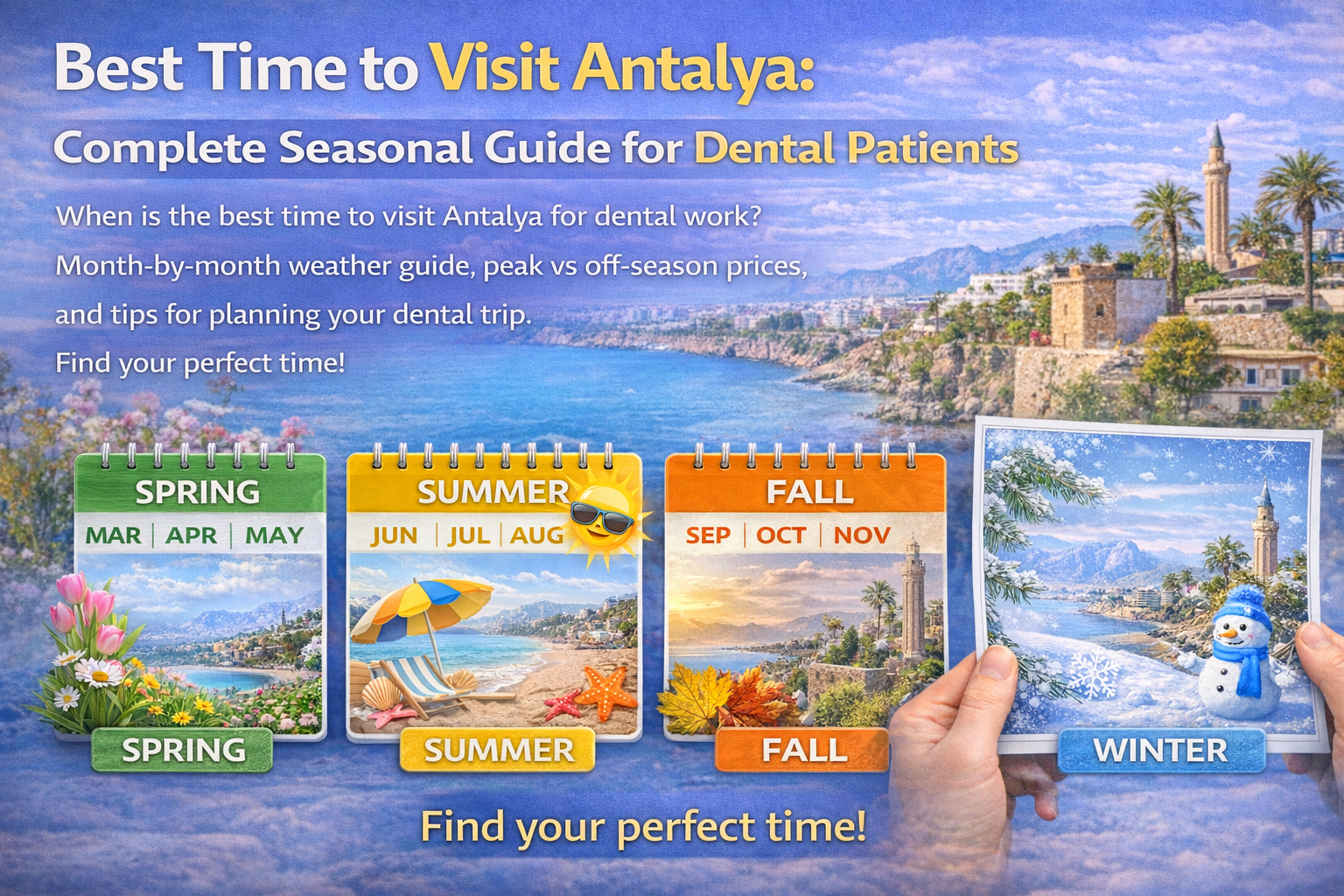
Best Time to Visit Antalya: Complete Seasonal Guide for Dental Patients
Antalya enjoys one of the most pleasant climates in the Mediterranean, with over 300 days of sunshine annually and mild temperatures year-round. But when is the ideal time to visit for dental treatment? The answer depends on your priorities—whether you want the warmest beach weather, the lowest prices, the fewest crowds, or simply a comfortable environment for recovery. This comprehensive guide breaks down Antalya’s seasons to help you choose the perfect time for your dental journey.
Spring (March – May): The Ideal Choice
Spring is widely considered the best time to visit Antalya for dental treatment, offering a perfect balance of pleasant weather, reasonable prices, and manageable crowds. March sees temperatures rising from winter lows, averaging 15-18°C (59-64°F), with occasional rain but plenty of sunny days. By April, the weather becomes consistently warm and comfortable, typically 18-23°C (64-73°F), ideal for outdoor activities without the intense summer heat.
May is particularly excellent—temperatures reach 23-28°C (73-82°F), perfect for beach days and sightseeing, yet before the peak summer crowds arrive. The sea becomes swimmable (around 20-22°C), wildflowers bloom throughout the region, and the atmosphere is vibrant but not overcrowded. Flights and hotels remain more affordable than in summer, and you’ll find clinics operating at full capacity without the holiday rush.
For dental patients specifically, spring’s moderate temperatures aid comfortable recovery. You’re not dealing with excessive heat that can worsen swelling or make you feel unwell after procedures. The pleasant weather encourages gentle walks and exploration between appointments, contributing to both physical recovery and mental wellbeing. Spring is our most recommended season for patients who have flexibility in their travel dates.
Summer (June – August): Beach Holiday Season
Summer brings Antalya’s hottest weather and busiest tourist season. June sees temperatures of 28-33°C (82-91°F), climbing to 30-35°C (86-95°F) in July and August, occasionally exceeding 40°C (104°F) during heat waves. Humidity is generally manageable due to sea breezes, but midday heat can be intense. The sea reaches perfect swimming temperatures of 25-28°C (77-82°F).
For dental patients, summer offers advantages and challenges. The advantage is combining treatment with a proper beach holiday—between appointments, you can genuinely relax by the pool or sea, working on your tan while your new smile heals. All-inclusive resorts operate at their best, with full activity programs and extensive dining options. If you’re traveling with family who want a traditional summer holiday while you have treatment, summer makes everyone happy.
The challenges are significant, however. Heat can exacerbate post-procedure discomfort—swelling may be more pronounced, and you’ll want to stay in air-conditioned spaces rather than out in the sun. Prices peak during summer, with flights and accommodation costing significantly more than spring or autumn. The airport is crowded, beaches are packed, and popular restaurants require reservations. If you’re coming purely for dental work rather than a holiday, summer may not be the most comfortable choice.
Autumn (September – November): Another Excellent Window
Autumn rivals spring as an ideal time for dental tourism. September remains warm, typically 26-30°C (79-86°F), essentially an extension of summer but with fewer crowds as European schools return. The sea stays warm and swimmable well into October. This month offers perhaps the best value—summer-like conditions at shoulder-season prices.
October brings cooler, more comfortable temperatures of 21-26°C (70-79°F)—genuinely pleasant weather that doesn’t require hiding from the sun. Rain becomes more likely but usually consists of short showers rather than prolonged wet periods. The sea remains surprisingly warm (around 22-24°C), and beaches are blissfully uncrowded. October is excellent for patients wanting warmth without summer intensity.
November marks the transition to winter, with temperatures dropping to 16-20°C (61-68°F) and increased rainfall. Swimming season effectively ends, though the weather remains far milder than Northern Europe. November can be hit-or-miss—some years offer extended pleasant autumn conditions, while others turn gray and rainy. Prices drop significantly, making it attractive for budget-conscious patients comfortable with weather uncertainty.
Winter (December – February): Mild and Affordable
Antalya’s winter is remarkably mild compared to most of Europe. December through February sees average temperatures of 10-16°C (50-61°F)—cool but rarely cold. Frost is extremely rare in coastal areas, and snow is essentially unheard of. You’ll need a jacket and layers rather than heavy winter clothing. Rain is most common during winter months, with December and January being the wettest.
For dental patients, winter offers significant advantages. Prices reach their lowest—flights can be remarkably cheap, and hotels offer substantial discounts. Clinics are less busy, sometimes allowing more flexible scheduling. The cooler weather is actually ideal for recovery, particularly from surgical procedures where avoiding heat and sun exposure is recommended anyway.
The downsides are obvious—no beach holiday, shorter daylight hours, and unpredictable weather. Many resort hotels close or operate with limited facilities. However, the city itself remains fully operational, with restaurants, shops, attractions, and urban beaches accessible. For patients focused primarily on treatment with sightseeing as a secondary goal, winter represents exceptional value. January and February can feel surprisingly pleasant on sunny days, with clear skies and comfortable temperatures.
Month-by-Month Quick Guide
Here’s a quick overview for planning purposes. January and February are cool and affordable with occasional rainy days, temperatures averaging 10-14°C. March brings spring beginnings with increasing warmth, averaging 15-18°C. April offers lovely weather at good prices, averaging 18-23°C. May provides near-perfect conditions before summer crowds, averaging 23-28°C. June starts proper summer with temperatures of 28-33°C. July and August are hot and busy, averaging 30-35°C. September offers late summer warmth with fewer crowds, averaging 26-30°C. October brings pleasant autumn conditions, averaging 21-26°C. November is cooler with variable weather, averaging 16-20°C. December is mild winter with festive atmosphere, averaging 10-16°C.
Special Considerations for Dental Patients
Beyond weather preferences, dental patients should consider treatment-specific timing factors. If you’re having implants placed, you’ll need a return visit 3-6 months later for final restorations. Planning your first visit in spring means returning in autumn, both pleasant seasons. Major procedures benefit from recovery in moderate temperatures rather than extreme heat. If you’re combining dental work with a beach holiday for family, summer may be necessary despite being less ideal for recovery.
Some patients prefer specific holiday periods for time-off work. Christmas and New Year see many travelers in Antalya—the festive atmosphere is enjoyable, and clinics remain open (except specific holidays). Easter period offers pleasant spring weather combined with time off work for many Europeans. School holidays bring more families but also more flight options and resort activity.
Our Recommendation
For most dental patients, we recommend April-May or September-October as the ideal times to visit. These shoulder seasons offer comfortable temperatures for recovery, reasonable prices, fewer crowds, and enough warmth to enjoy Antalya’s outdoor attractions between appointments. That said, we welcome patients year-round and will ensure your experience is excellent regardless of when you visit. Contact Antalya Implant today to start planning your dental journey—whatever season suits you best.
Contact us today to plan your visit at the perfect time!